History
First generation (E53; 1999–2006)
The E53 X5 was manufactured between 1999 and 2006. It was developed shortly after BMW Group's acquisition of British off-road vehicle manufacturer Land Rover. BMW vehicles in turn benefitted significantly from Land Rover's technology.[8] The first generation X5 shares many components with the Range Rover (L322) model (specifically the hill descent control and off-road engine management systems). The engine and electronic systems were shared with the BMW E39 5 Series. A series of petrol inline-6 and V-8 engines were offered, along with diesel engines. Engine displacement ranged from 3.0 to 4.8 litres. Production for the 2004 model year facelift began in late 2003.
Second generation (E70; 2006–2013)
The E70 X5 is the second generation of the X5. It debuted in July 2006 for the 2007 model year. The second generation featured key improvements, including BMW's iDrive system as standard across models, and an optional third row of seats for increased seven-passenger capacity. Trim and engine level nomenclature for the X5 after 2008 follows the same nomenclature used for other BMW vehicles. The X5 3.0si was renamed the X5 xDrive30i, and the X5 4.8i was renamed the X5 xDrive48i. In 2010 BMW replaced the DVD-based CCC system (which powered iDrive) with a CIC hard drive system. In 2009, the diesel xDrive35d variant became available in Canada and the United States, along with the BMW 335d 3-Series sedan.[9] The M Performance variant was unveiled at the New York Auto Show in April 2009, and went on sale in September 2009 (2010 model year). Sharing its drivetrain with the X6 M, the X5 M featured BMW's first turbocharged M Power V-8, producing 555 bhp (414 kW) and 500 lb⋅ft (680 N⋅m) of torque. The E70 received a facelift for the 2011 model year, known as the LCI. For the 2011 model year, the X5 became BMW's 3rd best-selling model, after the best-selling 3 Series (E90), and second best-selling 5 Series (F10).
Third generation (F15/F85; 2013–2018)
The F15 X5 (or F85 for the X5 M) is the third generation of the X5, and was first unveiled to the public on 30 May 2013. It officially debuted in November 2013. It shared the same chassis and wheelbase as the E70, and introduced a choice of three engines. The range included the xDrive50i (petrol V8 producing 450 bhp), the xDrive30d (turbocharged inline-6 diesel producing 258 bhp), and the M50d Performance (turbocharged inline-6 diesel producing 380 bhp). In December 2013, additional engine options became available. This included the inline-6 xDrive40d and xDrive35i models, as well as the inline-4 xDrive25d (all-wheel drive) and sDrive25d (rear-wheel drive) models. BMW added a Plug-in Hybrid Electric Vehicle model (the xDrive40e), which was powered by a turbocharged inline-4 engine. The xDrive40e's electric motor achieves a peak power output of 83 kW, and a continuous output of 55 kW with the 9kWh 351V Li-ion battery pack.
Fourth generation (G05/G18/F95; 2019–Present)
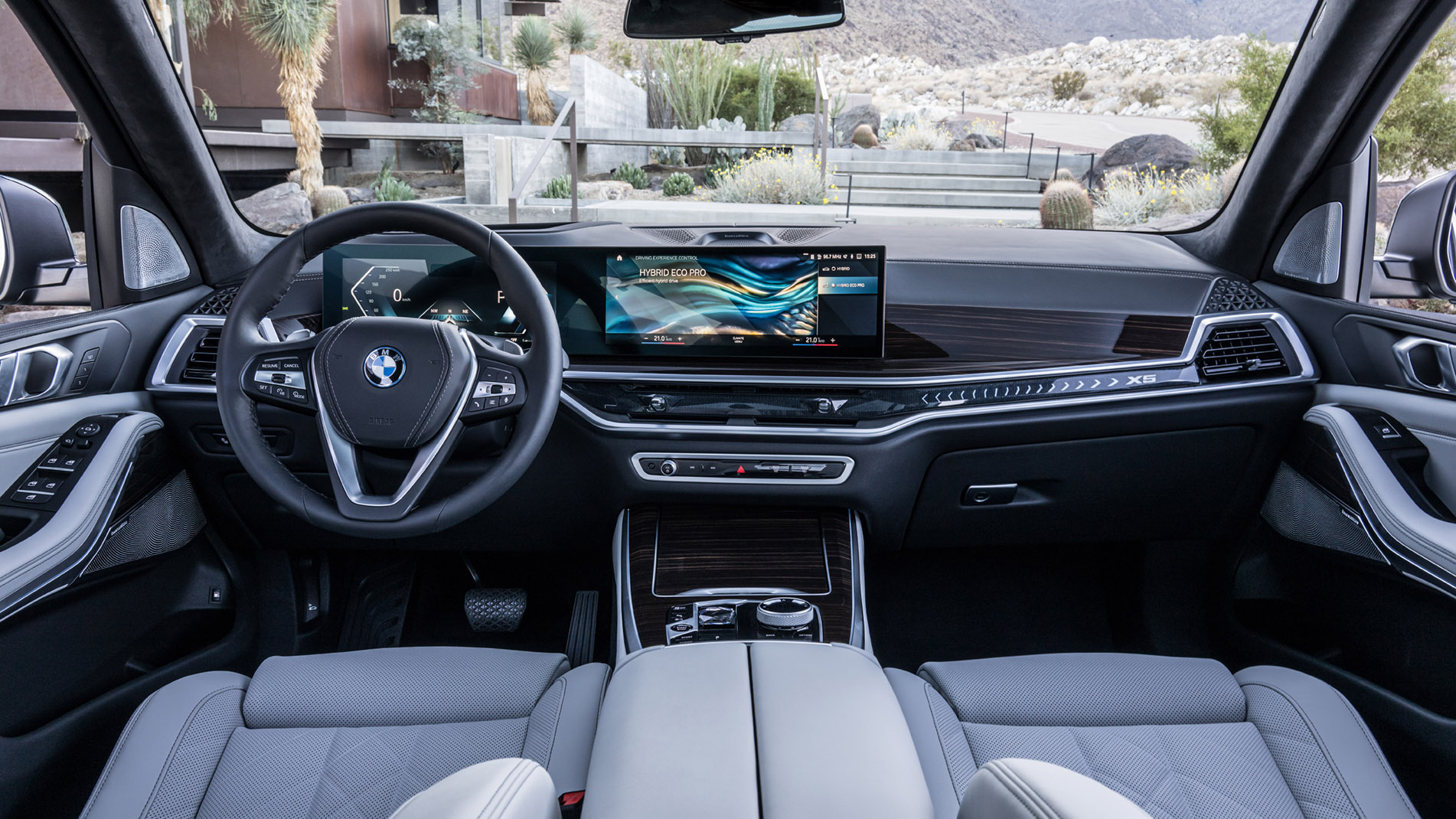
The G05 X5 is the fourth (and current) generation of the X5. It was unveiled to the public online, on 6 June 2018. It officially debuted in November 2018. It is based on the BMW Group's new Cluster Architecture (CLAR) chassis. All 2019 model year X5s were equipped with xDrive all-wheel drive. An sDrive (rear-wheel drive) variant was added to the US model lineup for 2020. The 2020 X5 sDrive was powered by BMW's inline-6 petrol B58 engine (the sDrive40i). Another 2020 model year addition was the xDrive45e PHEV. It also has the firm's B58 engine, mated with an 82 kW (110 hp) electric motor. The result is a combined power output of 290 kW (389 hp) from its larger 24 kWh battery pack. A long wheelbase (LWB) version of the BMW X5 was developed for the Chinese market under the model code G18. The wheelbase of the G18 is extended by 13 cm over the standard X5, mirroring the wheelbase of the X7 and XM. The G18 was assembled at BMW Plant Shenyang in Shenyang.